

For someone who stands 5 feet 2 inches tall, walking a mile feels different than it does for a taller person. The rhythm of the stride, the way the arms swing, even the pace required to keep up with a longer-legged friend — all of it reflects basic biomechanics. Height influences stride length, and stride length determines how many steps are required to cover a fixed distance. The relationship is mathematical, yet it also carries practical implications for fitness tracking, weight management, and everyday activity goals.
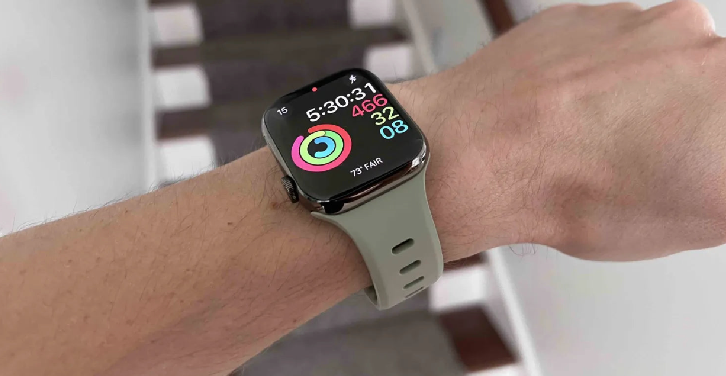
Many people use step counters, smartwatches, or mobile apps to track their movement. They set targets — 8,000 steps, 10,000 steps, sometimes more — without always understanding how those numbers translate into miles. For someone who is 5’2″, the number of steps required to complete a mile will typically be higher than average. The explanation lies in stride length, which is closely tied to leg length and overall height.
Understanding Stride Length at 5’2″
Stride length is the distance covered between successive placements of the same foot. For walking, a general estimation formula often used in kinesiology suggests:
Stride length ≈ height × 0.413
For a person who is 5’2″ (62 inches tall):
62 inches × 0.413 ≈ 25.6 inches per step
Since one mile equals 63,360 inches, dividing total inches by estimated stride length gives:
63,360 ÷ 25.6 ≈ 2,475 steps
That figure represents a moderate walking pace. In practical terms, someone who is 5’2″ will typically take between 2,400 and 2,600 steps per mile, depending on pace and terrain.
A slower, relaxed walk shortens stride length slightly, pushing the step count closer to 2,600. A brisk walk lengthens stride, reducing steps per mile closer to 2,400. The variation is natural and reflects dynamic movement rather than fixed geometry.
It is worth noting that stride length increases during running. The mechanics shift from a pendulum-like walking motion to a more forceful extension of the hips and knees. As a result, the number of steps per mile decreases when jogging or running, even for someone 5’2″.
Walking vs. Running: How Pace Changes Step Count

At a comfortable walking speed — roughly 3 miles per hour — a 5’2″ individual might record around 2,500 steps per mile. Increase the pace to a brisk walk or light jog, and stride length naturally expands.
When running at a moderate speed, stride length may reach approximately 0.65 to 0.75 times height. Using a conservative estimate:
62 inches × 0.65 ≈ 40 inches per stride
63,360 ÷ 40 ≈ 1,584 steps per mile
In real-world conditions, most runners at 5’2″ will average 1,700 to 1,900 steps per mile, depending on cadence and efficiency.
Cadence — the number of steps taken per minute — also influences the final count. Many distance runners aim for a cadence near 170–180 steps per minute to maintain efficiency and reduce joint strain. Height plays a role, but technique and conditioning can significantly alter stride patterns.
Why Height Makes Such a Noticeable Difference
A taller individual with a height of 5’10” or 6’0″ covers more ground with each step due to longer femur and tibia lengths. That structural advantage translates directly into fewer steps per mile. The difference can be several hundred steps over the same distance.
For someone 5’2″, covering a mile demands slightly more repetitive motion, which increases overall step count but does not necessarily increase exertion proportionally. Energy expenditure depends on body mass, walking speed, terrain, and cardiovascular conditioning.
Research in exercise physiology shows that shorter individuals may exhibit slightly higher step frequencies at similar walking speeds, yet total caloric expenditure per mile tends to remain comparable across heights when weight is similar. The body adapts stride length and cadence to maintain efficiency.
How Accurate Are Fitness Trackers?
Step counters rely on accelerometers that detect repetitive motion. They do not measure distance directly unless calibrated with GPS. If a device uses a standard stride estimate that does not reflect your height, the mileage calculation may be slightly inaccurate.
Most smartwatches allow manual entry of height, which improves stride estimation. For someone 5’2″, entering accurate height information ensures more precise distance tracking. For even better accuracy, walking a measured mile and comparing step data can help refine device calibration.
Environmental factors also affect readings. Inclines, uneven terrain, pushing a stroller, or carrying bags may alter arm swing, reducing sensor accuracy. Devices worn at the waist sometimes provide slightly more consistent results than wrist-based trackers during certain activities.
Steps Per Mile at Different Speeds (5’2″ Height)
Here is a practical breakdown:
- Slow walk (2 mph): ~2,600 steps per mile
- Moderate walk (3 mph): ~2,450–2,500 steps per mile
- Brisk walk (4 mph): ~2,300–2,400 steps per mile
- Jogging (5–6 mph): ~1,800–2,000 steps per mile
These figures are averages, not rigid benchmarks. Individual biomechanics vary. Hip flexibility, ankle mobility, and walking surface all influence stride length.
What This Means for a 10,000-Step Goal
Many health programs promote 10,000 steps per day as a general movement benchmark. For someone 5’2″:
10,000 steps ÷ 2,500 steps per mile ≈ 4 miles
This means reaching 10,000 steps corresponds to roughly four miles of walking at a moderate pace.
Understanding this translation provides clarity. If a 5’2″ individual walks two miles per day, that equates to approximately 5,000 steps. If the goal is cardiovascular endurance rather than arbitrary step totals, focusing on distance and pace may feel more intuitive.
Stride Length and Injury Prevention
Shorter stride lengths often reduce impact stress compared to exaggerated overstriding. For walkers and runners alike, efficient mechanics matter more than raw step count.
A 5’2″ walker who attempts to artificially lengthen stride to “reduce steps” may increase joint strain, particularly in the hips and knees. Proper walking form involves:
- Upright posture
- Natural arm swing
- Heel-to-toe motion
- Comfortable cadence
Running mechanics benefit from midfoot landing and consistent cadence rather than aggressive stride extension. Many physical therapists emphasize cadence adjustment over stride manipulation when addressing repetitive strain injuries.
Terrain and Incline Effects
Walking uphill shortens stride, increasing step count per mile. Downhill walking may lengthen stride slightly but often requires controlled steps for balance.
Trail walking, sand, or grass introduce micro-adjustments that subtly increase steps compared to smooth pavement. Someone 5’2″ walking a mile on a hiking trail may record 2,600–2,700 steps rather than 2,500.
Indoor treadmill walking usually produces consistent counts because the surface remains stable and predictable.
Individual Variation Beyond Height
Height offers a reliable starting point, but it does not dictate stride entirely. Two individuals both measuring 5’2″ may show different step counts per mile due to:
- Leg-to-torso ratio
- Flexibility
- Athletic training
- Age
- Body composition
Athletes often develop more efficient strides over time. Conversely, individuals new to exercise may adopt shorter, cautious steps that increase total count.
Therefore, while the average range of 2,400–2,600 steps per mile holds true for many people at 5’2″, personal measurement offers the clearest picture.
How to Measure Your Exact Steps Per Mile
For precision:
- Walk one measured mile at a natural pace.
- Record total steps from your tracker.
- Repeat on a different day and average the results.
This eliminates guesswork and provides a baseline tailored to your body mechanics.
For runners, performing the same process during a steady run gives an accurate per-mile cadence count.
The Broader Fitness Perspective
Step counts offer a convenient metric, yet they are one dimension of overall health. Cardiovascular intensity, strength training, flexibility, and recovery all contribute to long-term well-being.
For someone 5’2″, knowing that a mile requires roughly 2,500 steps allows better planning of daily movement goals. It clarifies distance targets and contextualizes activity tracker numbers.
Movement is deeply personal. Height shapes stride, stride shapes step count, and step count translates into measurable distance. The mathematics may be simple, but the application becomes meaningful when aligned with individual goals and sustainable habits.
FAQs
- How many steps in a mile if you are 5’2″?
On average, a person who is 5’2″ takes about 2,400 to 2,600 steps to walk one mile at a moderate pace. - Does running reduce steps per mile at 5’2″?
Yes. Running increases stride length, so most individuals at 5’2″ will take around 1,700 to 2,000 steps per mile when jogging. - Why do shorter people take more steps per mile?
Shorter individuals generally have shorter stride lengths, meaning they must take more steps to cover the same distance. - Is 10,000 steps equal to five miles for someone 5’2″?
No. For someone 5’2″, 10,000 steps is typically closer to four miles. - How can I calculate my exact steps per mile?
Walk a measured mile at your normal pace and record your step count using a tracker. Repeat and average for accuracy.